

One Place, a Hundred Winters
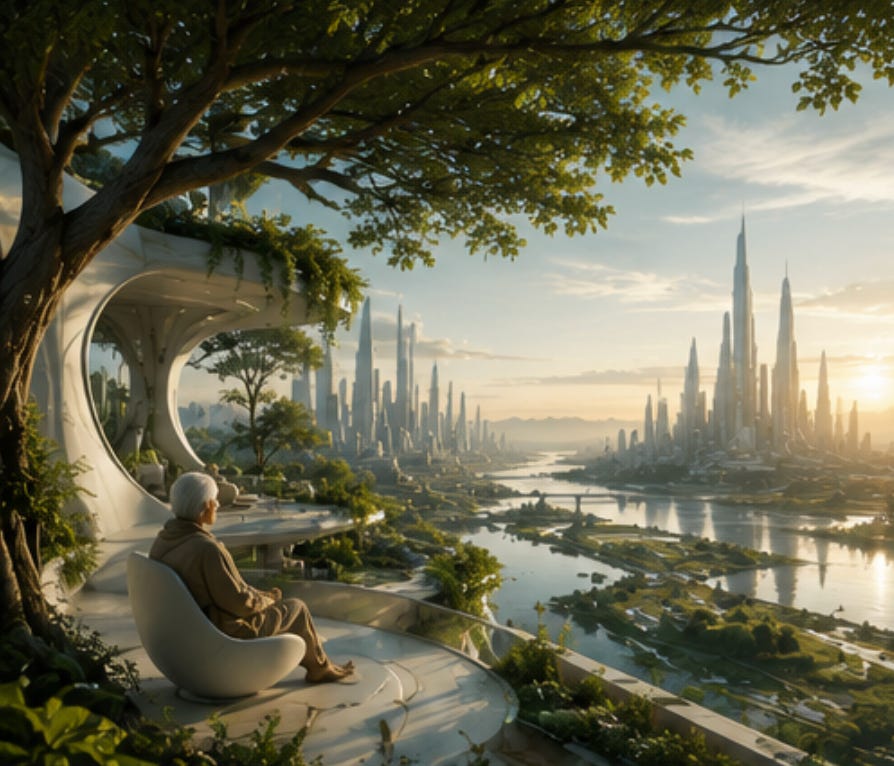
Consider a person who lives to a hundred. Set aside, for a moment, the biology of how they arrive there, the cells and clocks and the careful work of repair. Think instead about what they will have seen. If they have been fortunate enough to stay in one place, they will have watched a single street through a hundred winters. Or will have known a stand of trees first as saplings and then as canopy. Seen a river run clean, then run poorly, and perhaps, if others cared for it, run clean again.
A long life is not simply a longer possession of time. It is a longer relationship with a particular piece of the living world.
We have learned to speak of longevity as something done to the body: a problem of repair and decline, to be solved in the clinic and the laboratory. This is not wrong, but it is partial. A body ages inside a world, and that world is not the backdrop to a long life. It is one of its ingredients. When lives lengthen, the bond between the two deepens in ways our biomedical language is not yet equipped to describe.
The argument I want to make is easy to state and harder to absorb. The longer a life becomes, the more deeply it is entangled with the systems that sustain it, and the more, in turn, it reciprocates them. Extension is not a neutral lengthening. It changes the moral and ecological character of a life.
A body ages inside a world, and that world is not the backdrop to a long life. It is one of its ingredients.
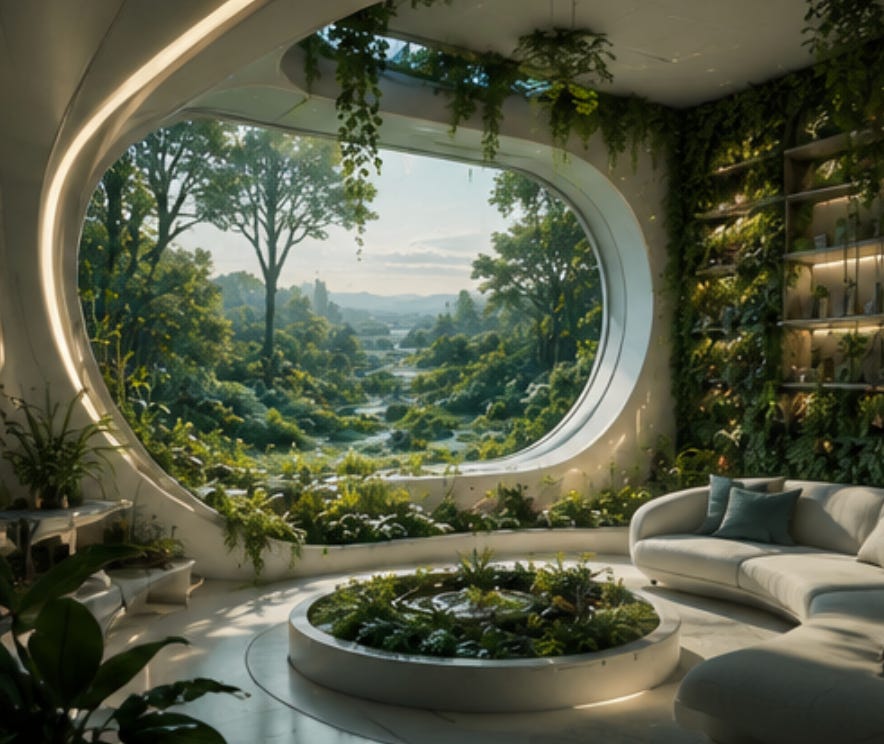
The Arithmetic of Entanglement
When we picture the risks of a longer life, we tend to picture them additively: more years of breathing poor air, more decades in which a warming climate can do its work, a larger lifetime tally of harms we already understand. This is true as far as it goes. But it understates the case, because it treats the extra years as more of the same.
They are not more of the same. A century is long enough to change one’s relationship to consequence. Someone who lives to seventy may build a life on convenient assumptions, cheap energy, disposable things, a climate that holds, and die before the bill arrives. Someone who lives to a hundred will increasingly live to read it. Will inhabit the second-order effects of their own first-order choices. The exhausted soil, the missing birdsong, the summers that have turned dangerous: these will not reach them as abstractions in a report. They will be the texture of later decades.
This is the quiet asymmetry of a long life. For most of human history, the distance between how we live and what it costs has been wide enough to place the costs on people we would never meet. A long enough life narrows that distance. It brings some of those people into view. One of them is your older self.
A century is long enough to change one’s relationship to consequence.
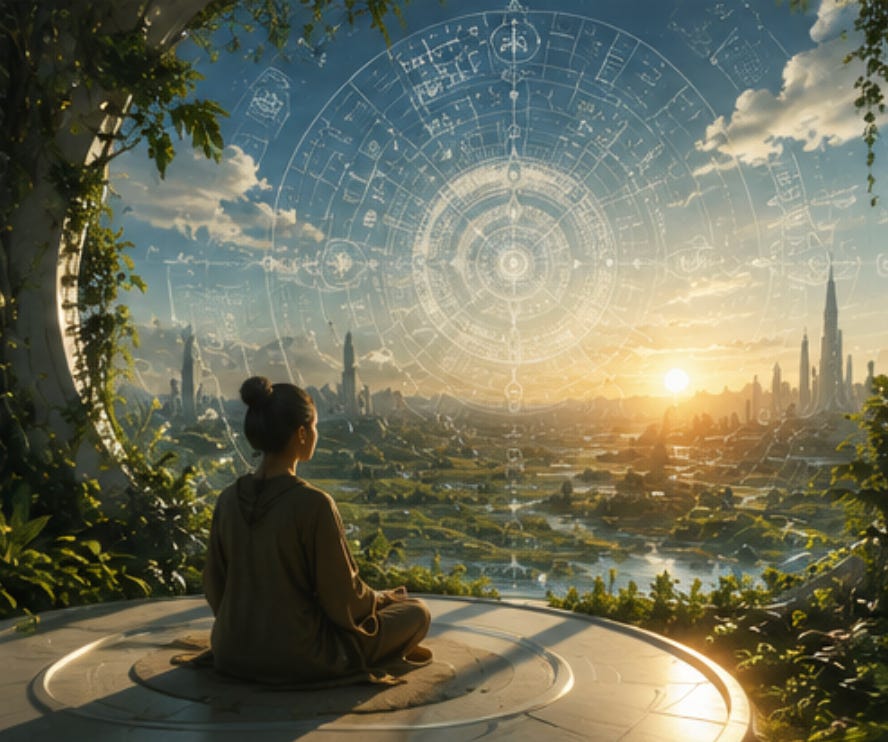
What Care Repays
There is a habit of imagining the additional years of a long life as years of need: the frail decades, the season of dependence, the burden to be managed. Care, in this picture, is what the old receive.
I want to press the opposite emphasis. If a long life accumulates obligation, then the years it adds are precisely the years in which that obligation might be met. Care is not only what a long life requires. It is what a long life is uniquely placed to give.
Care, understood widely, is more than the tending of bodies. It is the practice by which a life keeps faith with the systems and the people it is bound to: the keeping of a garden, the teaching of someone who will outlive you, the patient restoration of a piece of ground, the handing on of memory that lets a place stay legible to those who arrive later. These are not soft additions to a longevity agenda. They are close to its purpose. A society that lengthens life without widening the years in which people give care back, to one another, to the land, to the future, will have produced need without meaning.
Seen this way, the ecological and the social stop being separate concerns. To care for a river and to care for a grandchild are, across the span of a century, the same act carried out on different subjects: the deliberate handing on of a world in a condition worth inheriting.
Care is not only what a long life requires. It is what a long life is uniquely placed to give.
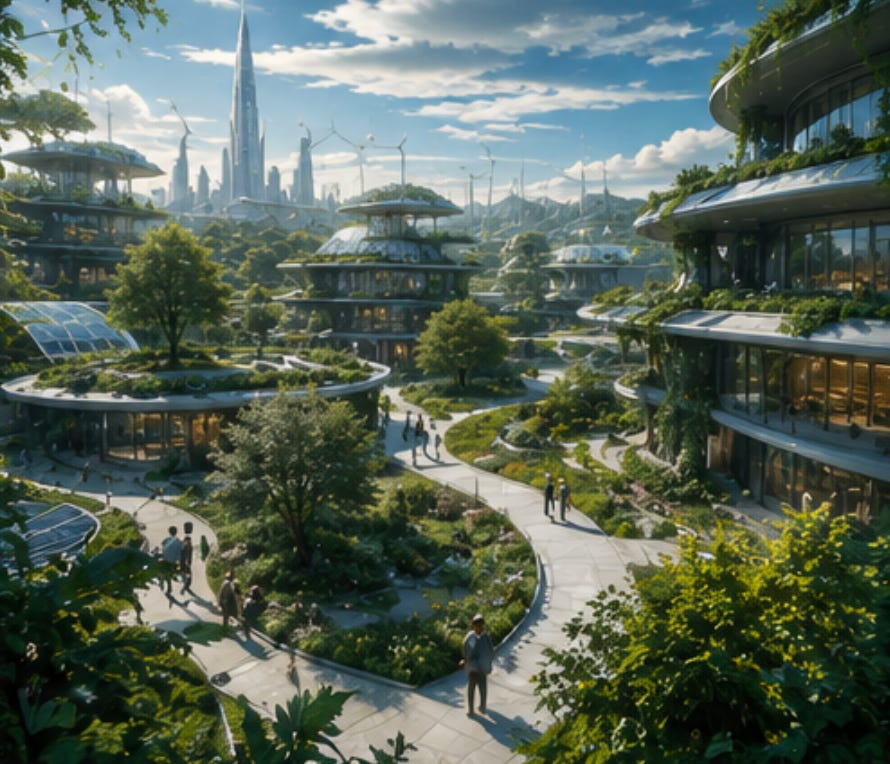
Designing for Return
If a long life is a long inhabitation, then the places we build for long lives must be made to be inhabited, and not merely replaced.
We have built, for the most part, on the logic of the short lifecycle. Things are made to be used and discarded, buildings to be developed and redeveloped, streets to be dug and dug again. Within a forty-year horizon this reads as dynamism. Across a hundred-year life it reads as something else: a world that will not hold still long enough to be known.
A place meant to be lived in for a century asks for a different measure. Call it return: the capacity to meet the same place, changed, more than once. Much of what sustains a very old person rests on continuities of exactly this kind, the tree she can watch reach its full height inside her own lifespan, the square still recognisable to her at ninety, the markers by which a place stays a place rather than a shifting arrangement of surfaces. Remove those markers, rebuild them, and remove them again on the tempo of continual replacement, and the long-lived are quietly disinherited from their own surroundings. They outlive the legibility of the world.
Here regenerative design ceases to be an environmental courtesy and becomes a condition of a good old age. A regenerative place is built to endure and to renew at once, to hold its shape long enough to be remembered while staying alive enough to change. It is also, not by accident, the kind of place a warming century can afford, that a body under heat can bear, that other species can share. The needs of a long human life and the needs of a living planet turn out, on inspection, to run in the same direction.
The long-lived are quietly disinherited from their own surroundings. They outlive the legibility of the world.
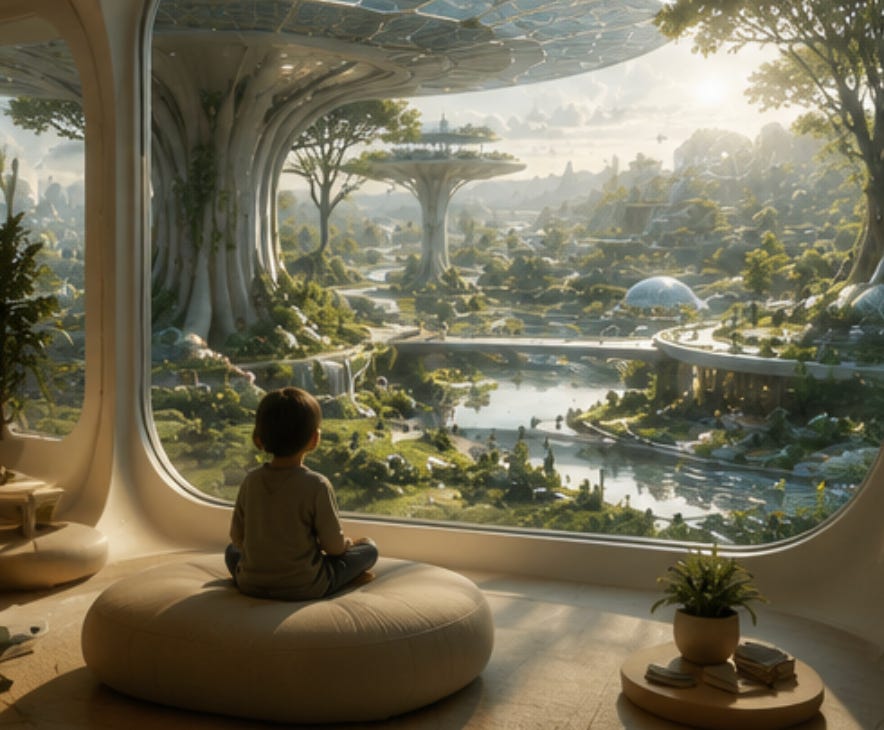
The Two Tempos
There is a deeper way to hold all of this, and it concerns time.
A hundred-year life is caught between two tempos that are not its own. Above it runs the tempo of the machine: a daily existence increasingly abstracted, automated and screen-lit, built to move faster than reflection and to refresh before anything has been felt through. Below it runs the tempo of the living world: soil that takes a century to build an inch of itself, a forest that matures across generations, a climate that answers us on a delay measured in decades. Human life once sat close to the slower of these. It no longer does. We have raised an outer environment that moves far too quickly for a body to metabolise upon an ecological foundation that moves far too slowly for a culture of continual replacement to notice.
A long life is the timescale at which this mismatch turns both visible and hard to bear. It is long enough to be worn down by the fast world and long enough to witness the slow one, long enough to see the forest planted in youth and the same forest lost in age. And so it is also, I suspect, the timescale at which the mismatch might be repaired. Replenishing, in the end, is not only a technique for restoring ecosystems. It is a discipline of tempo, the deliberate work of returning human life to the rate at which the living world can actually renew itself. A century is long enough to relearn that rate. It may be the only span of a modern life that is.
Replenishing is not only a technique for restoring ecosystems. It is a discipline of tempo.
The Reckoning and the Gift
We are accustomed to calling extended lifespan a gift, and it is. But a gift of this magnitude is also a reckoning. The hundred-year life is the first ordinary human span long enough to hold a person accountable to the world they have helped to make and, in the same movement, long enough to let them mend some of it. That double character, burden and opportunity held together, is not a flaw in the promise of longevity. Properly understood, it is the promise.
The years we can now add to a life are real. Whether they add up to flourishing will rest on something the biology cannot provide: the condition of the ground those years are lived on, the depth of the relationships they are lived inside, and whether a long life has left the living world a little more able to sustain the next one.
The measure of a good long life will not be its length. It will be what it hands on.
This essay grows out of my contribution to “The Human Exposome: Whole-System Health Underpinning Advances in Human Healthspan, Resilience, and Flourishing,” a chapter in Frontiers of Longevity Science, Vol. 2 (Springer Nature), Technological Possibilities of Life Extension. With thanks to Tina Woods, who set the question and invited me to answer it.
The book publishes shortly. If you would like to know more, please do get in touch.
