

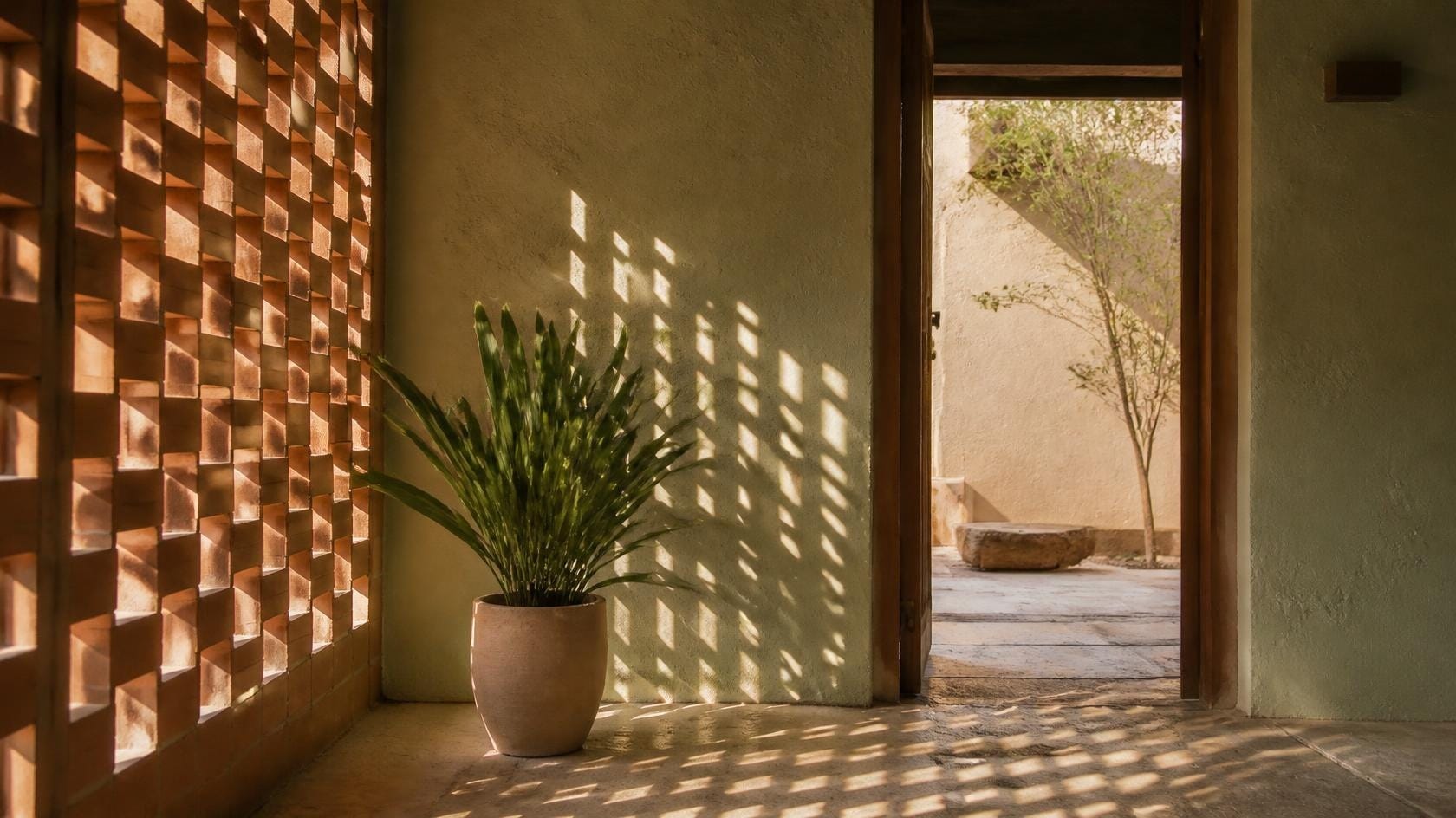
Most buildings are designed for a person who does not exist: a calm, rested adult who arrives regulated and stays that way all day.
The real people walking through the door are different. In the WHO World Mental Health Surveys, which interviewed 68,894 people across 24 countries, 70.4 per cent had lived through at least one traumatic event in their lifetime (Kessler and colleagues, 2017). Most of the bodies in any office, hospital, school or station have been through something. A building that ignores this is not neutral. It is designing for someone else.
This is the question I want to put on the table: what happens when triggered people spend their lives in triggering places? And what would it take to build places that help a nervous system settle, rather than asking it to stay on guard?
The body reads the room first
I have written before about Nervous System Compliant™ design, the standard I set out this spring. Its premise is simple. The moment you walk into a room, your nervous system begins its own assessment of light, sound, proportion, air and the presence of living things, long before you are aware of it. Stephen Porges called this pre-conscious appraisal of safety neuroception.
We spend around 93 per cent of our lives inside buildings and vehicles, according to the US National Human Activity Pattern Survey. That makes the built environment a continuous biological input. As I argued in Peace Is Kept in Rooms, these inputs do not reset between exposures. They accumulate, and allostatic load is the name for that cumulative cost.
For a nervous system shaped by trauma, the margin is thinner. Hypervigilance and a heightened startle response are recognised features of post traumatic stress. The same corridor that one person barely notices can keep another person braced for the whole working day.
What makes a place triggering
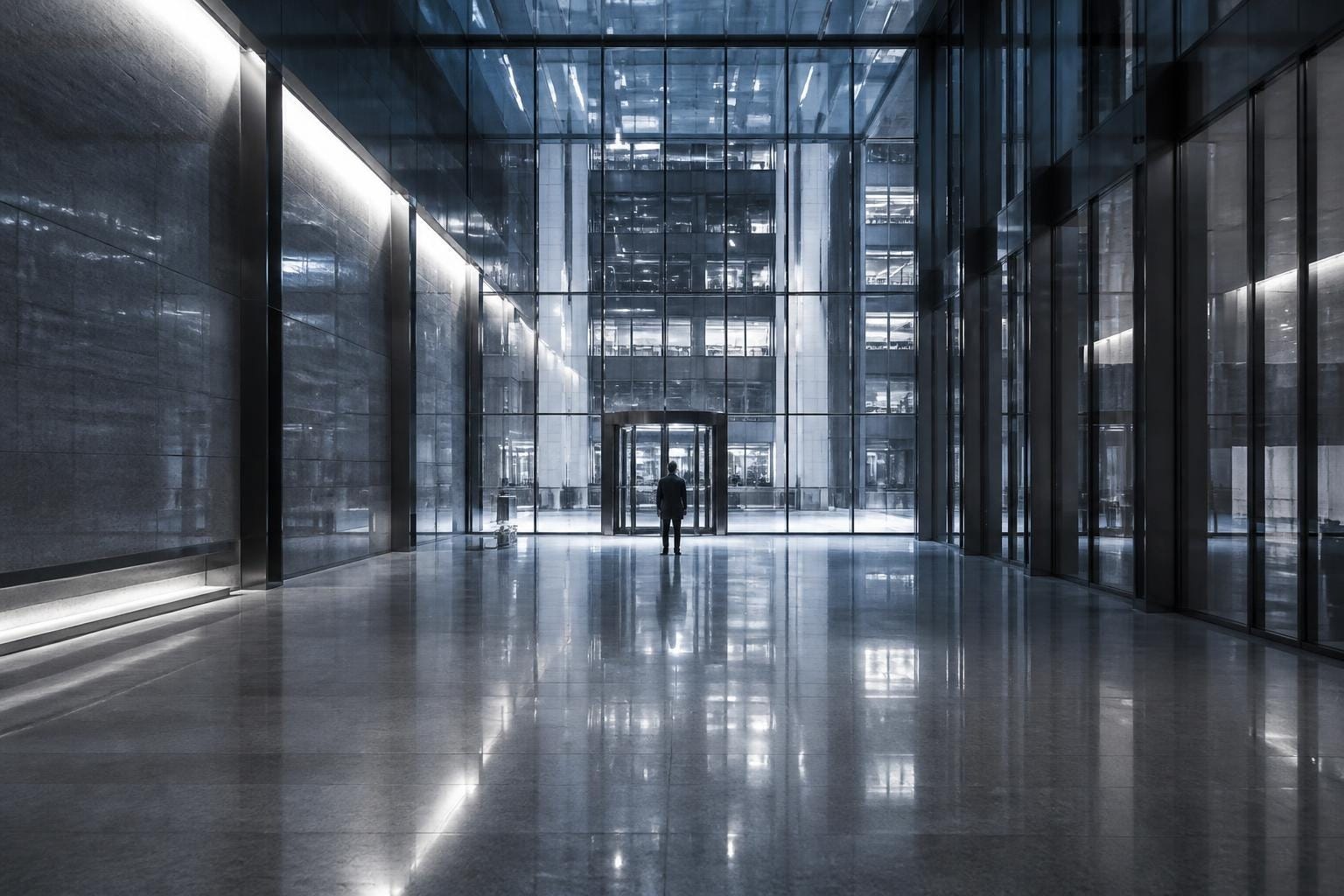
Across the thousands of buildings I have analysed, and in my doctoral research at UCL, the same patterns come up again and again:
Unpredictable sound. Not loud sound, uncertain sound: a noise without a visible source, a door that bangs, chatter that never resolves.
No retreat and no sightlines. Nowhere to step out of view, and no clear view of who is arriving or how to leave.
No control. In my post occupancy evaluation of the first residences in Masdar City, and across the twenty Abu Dhabi buildings in my PhD, the lack of occupant control over temperature and ventilation was consistently linked to dissatisfaction. In those twenty buildings, of more than 1,000 occupants surveyed, at least 80 per cent said it was too cold. People wore blankets indoors, or left the building to “defrost”.
Thresholds that shock. My doctoral thesis at UCL studied transitional zones in Abu Dhabi: the lobbies and entrances where bodies cross from more than 45°C outside into rooms cooled twenty degrees below that. The body is not at rest in those spaces. It is in active autonomic flux, and our comfort standards were never designed for it.
Light without rhythm. Fixed artificial light with no horizon and no daylight cycle, which works against the body’s clock.
The absence of living things. Spaces stripped of plants, water, soil and fresh air.
Patterns the body does not recognise. Which brings me to the part of this I have been thinking about most.
I explored unpredictable sound, light and the absence of living things in Your Space Is Speaking to Your Nervous System, along with a free Calm Audit you can use at home or at work.